
Turkey-GCC Logistics Corridor: Operational Consolidation and Gateway Configuration
The Turkey-Syria border crossing has resumed commercial TIR operations. Transit times have shown material reductions compared to maritime alternatives. This analysis examines gateway configurations, operational precedents, and timing windows for logistics operators and trade facilitation entities.
What Happened
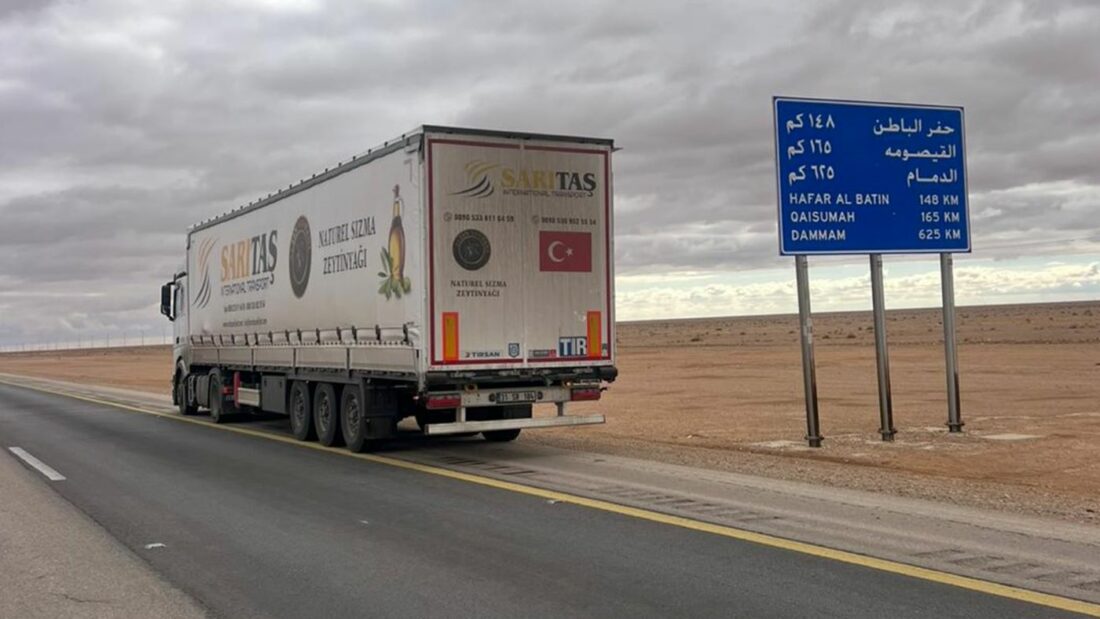
The Turkey-Syria border crossing has resumed commercial TIR operations following years of limited overland freight movement between Turkey and the Levant. Convoys have begun moving through Syrian territory toward Jordan, with onward connections to Saudi Arabia and the wider GCC region.
Transit times for overland freight from Turkey to Jordan have shown material reductions compared to alternative maritime routes through the Mediterranean and Egyptian land corridors. Early operational reports indicate efficiency gains measured in days rather than weeks in some cases, though exact figures vary by cargo type, routing decisions, and border processing conditions. Cost structures have also shifted, with operators reporting reductions relative to sea-land hybrid alternatives, though these advantages depend heavily on cargo volume, scheduling coordination, and regulatory alignment.
The route remains operational as of this writing, with convoy frequencies gradually increasing as operators test capacity limits and refine coordination protocols. This development represents a structural shift in regional freight options rather than a temporary arrangement. Infrastructure along the corridor—border facilities, customs systems, and road networks—is showing increasing capacity to handle sustained commercial traffic, though operational standards are still consolidating.
The question is no longer whether the route will function, but which gateway configurations will become standard and which operational norms will persist.
Why This Matters Now
Routes are not yet standardized. Operators entering the corridor during this consolidation phase are establishing precedents that will shape long-term trade flows. Early participants influence customs procedures, preferred crossing points, documentation standards, and intermodal handoff protocols. These operational defaults tend to persist once established, creating path dependency for future entrants.
The corridor is not a single route but a network of potential configurations. Freight originating in Turkey can reach GCC markets through multiple gateway combinations—Syrian crossings to Jordan and Saudi land borders, Iraqi transit to Kuwait or Saudi eastern provinces, or hybrid land-sea routes through Oman. Each configuration carries different cost structures, transit times, regulatory requirements, and infrastructure dependencies.
First movers in this environment do not simply benefit from timing advantages. They participate in defining the operational norms that subsequent operators will inherit. This is particularly relevant for logistics providers, port authorities, and trade facilitation entities seeking to position infrastructure or services within emerging trade patterns.
Gateway Logic: Comparing Regional Options
Jordan-Saudi Land Route
The most direct overland path from Turkey through Syria connects to Jordan's northern border, with onward transit to Saudi Arabia via the Omari or Haditha crossings. This route offers speed and simplicity for cargo destined to western Saudi provinces and Riyadh. Transit times are competitive relative to maritime alternatives, and the route avoids port congestion. However, capacity constraints at border crossings and infrastructure limitations in southern Syria create operational risks during high-volume periods.
Iraq Transit Corridor
Freight routed through Iraq's northern crossings (Habur/Ibrahim Khalil) can reach Kuwait, Saudi Arabia's Eastern Province, Bahrain, and Qatar without Syrian transit. This configuration benefits from Iraq's established TIR framework and avoids Syrian regulatory complexity. Transit times to Kuwait and Bahrain are comparable to the Jordan route, though distances to western Saudi markets are longer. Iraq's role as a regional logistics bridge has strengthened in recent years, supported by infrastructure investment and customs modernization.
Oman Hybrid Model
A less direct but strategically significant option involves overland transit to Oman's northern ports (Sohar, Khasab) followed by short-sea shipping to UAE and Saudi eastern ports. This hybrid approach combines land speed with maritime flexibility, enabling cargo to bypass congested land borders while maintaining cost advantages over full Mediterranean shipping routes. Oman's port infrastructure and free zone networks support this model, particularly for goods requiring warehousing or value-added services before final distribution.
Kuwait as GCC Entry Point
Kuwait's geographic position and established logistics infrastructure make it a viable gateway for Turkish freight entering the GCC via Iraq. The Abdali-Safwan crossing handles significant commercial traffic, and Kuwait's re-export frameworks facilitate onward distribution to Saudi Arabia, Bahrain, and Qatar. This route is particularly relevant for FMCG and consumer goods requiring rapid distribution across multiple GCC markets.
No single gateway dominates. Each configuration serves different cargo profiles, destination markets, and operational priorities. The critical factor is not which route is "best," but which combinations gain operational momentum and institutional support during this formative period.
Where MEDL Fits
MEDL International Business Relations operates at the intersection of early-stage trade opportunities and structured cross-border facilitation. The firm does not provide logistics services, operate freight networks, or manage customs processes. Instead, MEDL facilitates introductions between entities positioned to capitalize on emerging trade corridors.
In the context of the Turkey-GCC logistics corridor, MEDL connects logistics operators, port authorities, freight forwarders, and trade facilitation entities with counterparts across Turkey, the Levant, Iraq, and the GCC. These introductions are structured around specific operational needs—capacity partnerships, intermodal coordination, regulatory alignment, or infrastructure utilization—rather than general networking.
The value of facilitation at this stage lies in timing. Entities entering the corridor now are defining operational standards, testing route configurations, and establishing relationships that will shape long-term trade flows. MEDL's role is to accelerate these connections, ensuring that relevant parties engage in structured conversations before market patterns solidify.
This is not sales facilitation or transactional matchmaking. It is opportunity structuring at inflection points where early engagement creates disproportionate strategic value.
Closing: A Timing Window
The Turkey-GCC logistics corridor is operational, but its structure is not yet fixed. The coming period will determine which gateway configurations become standard, which operators establish dominant positions, and which infrastructure nodes capture sustained traffic volumes.
First movers in this environment are not simply early adopters. They are participants in shaping the operational defaults that will govern regional trade flows for years. For logistics operators, port authorities, and trade facilitation entities, this represents a rare window where engagement timing matters as much as operational capability.
The corridor is open. The question is who will define how it functions.
Found this article helpful? Share it with your network.
Comments
Be the first to comment!
Leave a Comment
Stay Updated
Get the latest insights on GCC-Turkey business opportunities delivered to your inbox.